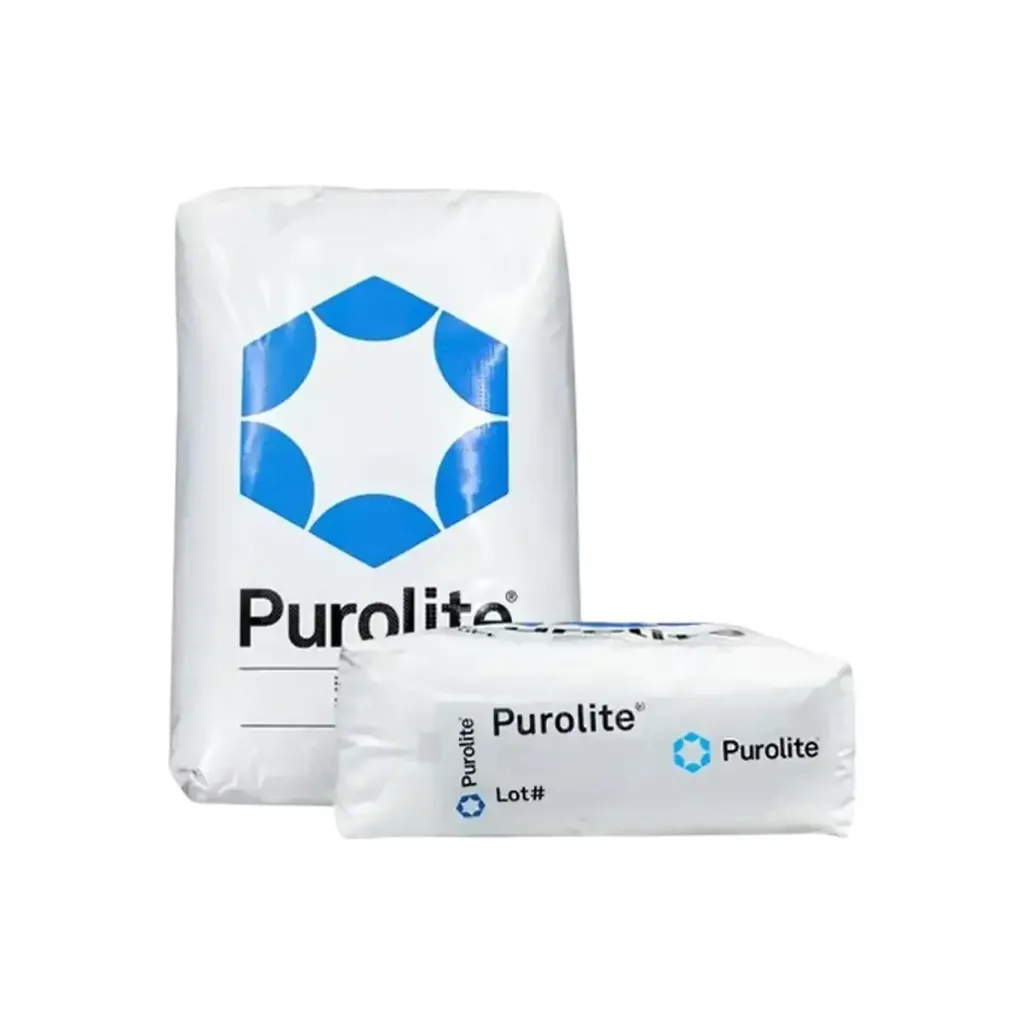
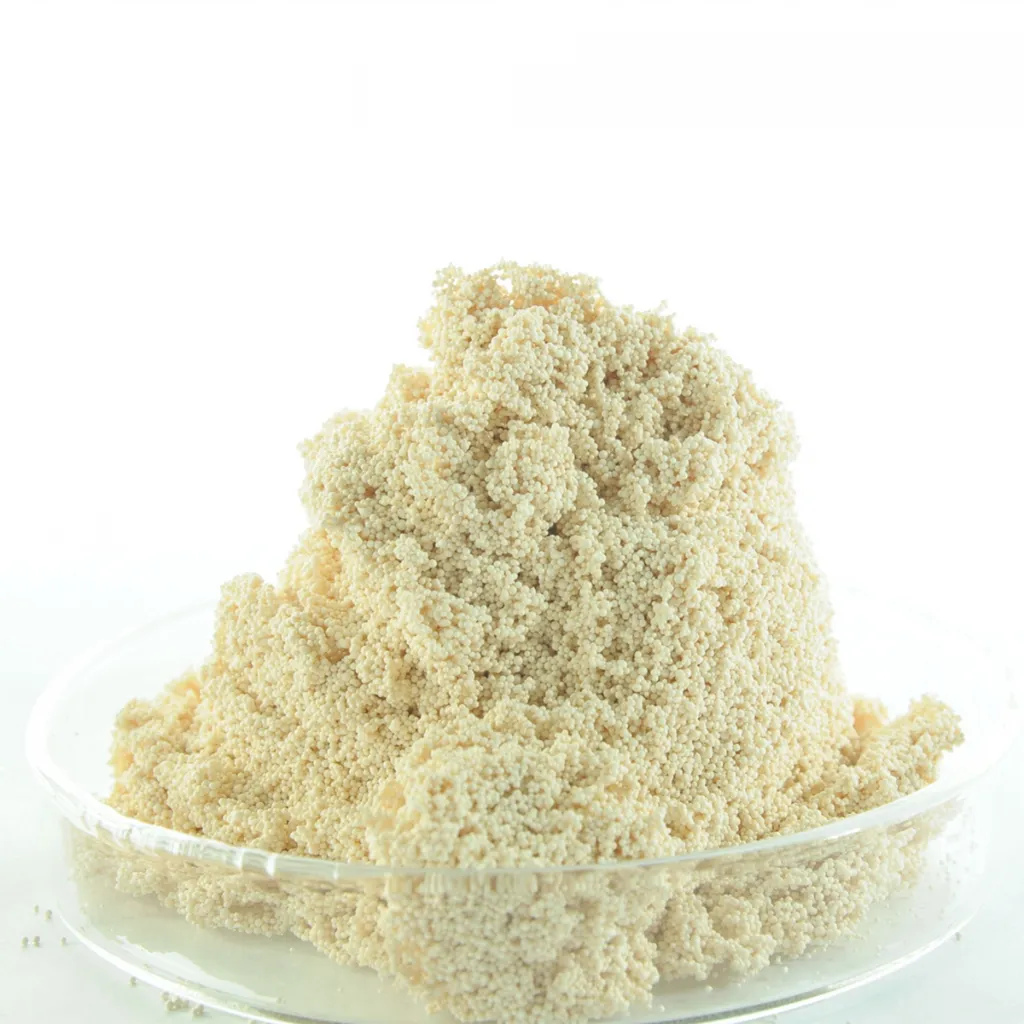
This industrial anion resin features a crosslinked macroporous polystyrene matrix with Type I Quaternary Ammonium functional groups, operating in a standard chloride (Cl⁻) ionic form. Its spherical beads are optimized to handle heavy organic loading, functioning as a reliable organic scavenger to remove yellow-brown organic acids while maintaining stable pressure drop characteristics across the bed. The media complies with strict industry safety standards and holds Kosher, Halal, and WQA to NSF/ANSI-61 certifications for food-grade processing and drinking water applications. Purolite A502PS retains its physical integrity over extended operation cycles and undergoes complete regeneration using a standard sodium chloride (NaCl) brine solution.
Removal Capabilities:
Organic Decolorization: Efficiently extracts complex color-forming organic compounds and organic acids from cane and starch sugar solutions to make liquids perfectly clear.
Organic Matter Reduction: Functions as an effective organic scavenger, trapping high concentrations of natural organic matter (NOM) like humic and fulvic acids from water supplies.
Technical Characteristics of the Media:
Product Type: Strong Base Anion Exchange Resin
Matrix Structure: Macroporous polystyrene crosslinked with divinylbenzene
Functional Group: Type I Quaternary Ammonium
Ionic Form during Delivery: Cl⁻ form
Total Exchange Capacity: Minimum 0.85 eq/L (18.6 kgr/ft³ as CaCO₃)
Moisture Content: 66–72%
Bead Size Distribution Range: 425–1,200 µm (Maximum 2% < 425 µm; Uniformity Coefficient ≤ 1.6)
Number of Uncracked Beads: Minimum 95% whole beads
Beads Particle Density: 1.04 g/mL
Bulk Weight / Shipping Weight: 640–690 g/L (40.0–43.1 lbs/ft³)
Standard Packaging Volume: 25-liter bags
Recommended Operational Conditions:
Maximum Operating Temperature: 100°C (212°F) in Cl⁻ form / 60°C (140°F) in OH⁻ form
Operating pH Range: 0–14
Minimum Bed Depth: 800 mm (2.6 ft)
Service / Fast Rinse Flow Rate: 10–40 BV/h (Depending on influent fluid quality)
Co-Current Regeneration / Displacement Rinse Flow Rate: 1–10 m/h (0.4–4 gpm/ft²)
Total Rinse Water Consumption: 3–6 Bed volumes
Regenerant Type and Concentration: 8–12% NaCl brine solution
Salt Consumption for Regeneration: 100–150 g/L of resin
Please note: To calculate the exact filtration cycle capacity and optimize the automated regeneration settings of your water treatment or sugar decolorization unit, a professional fluid analysis is highly recommended.
More Products
These other products might interest you