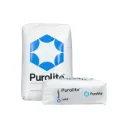
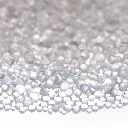
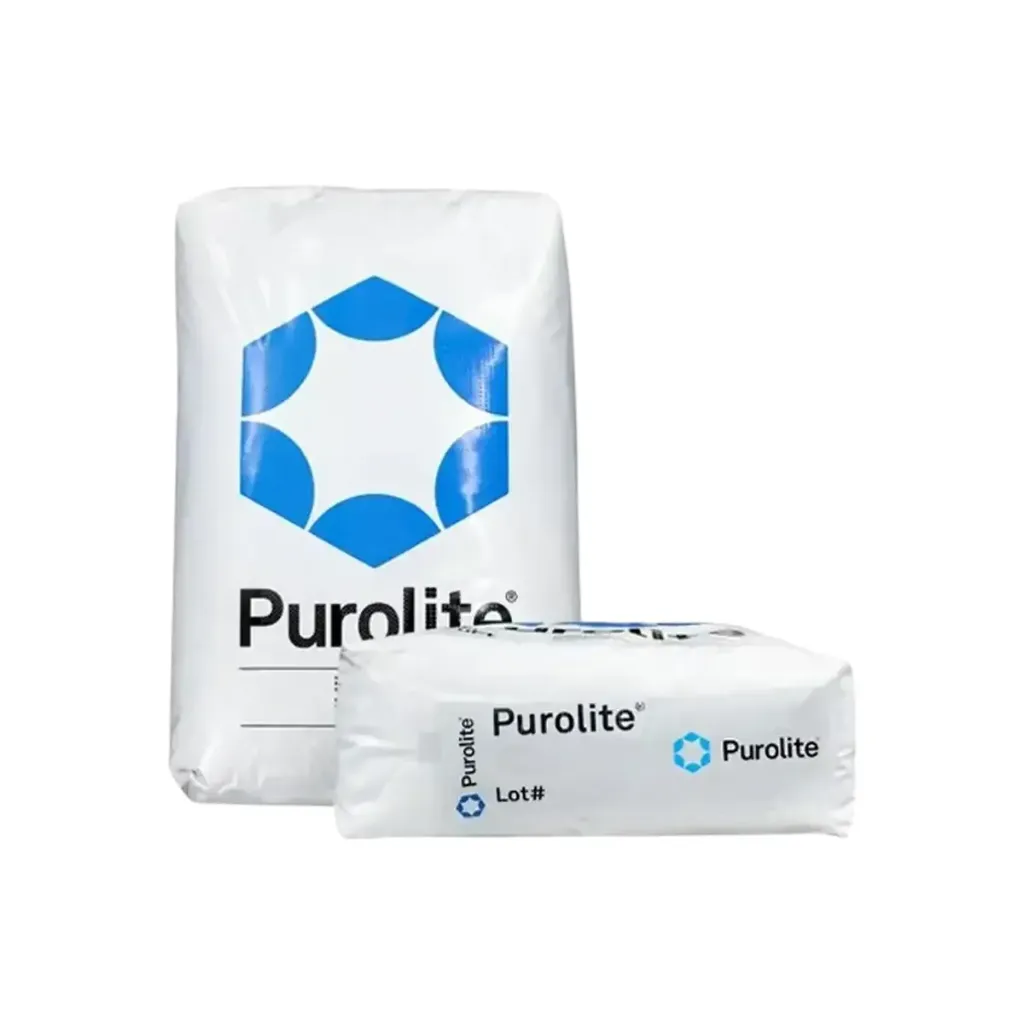
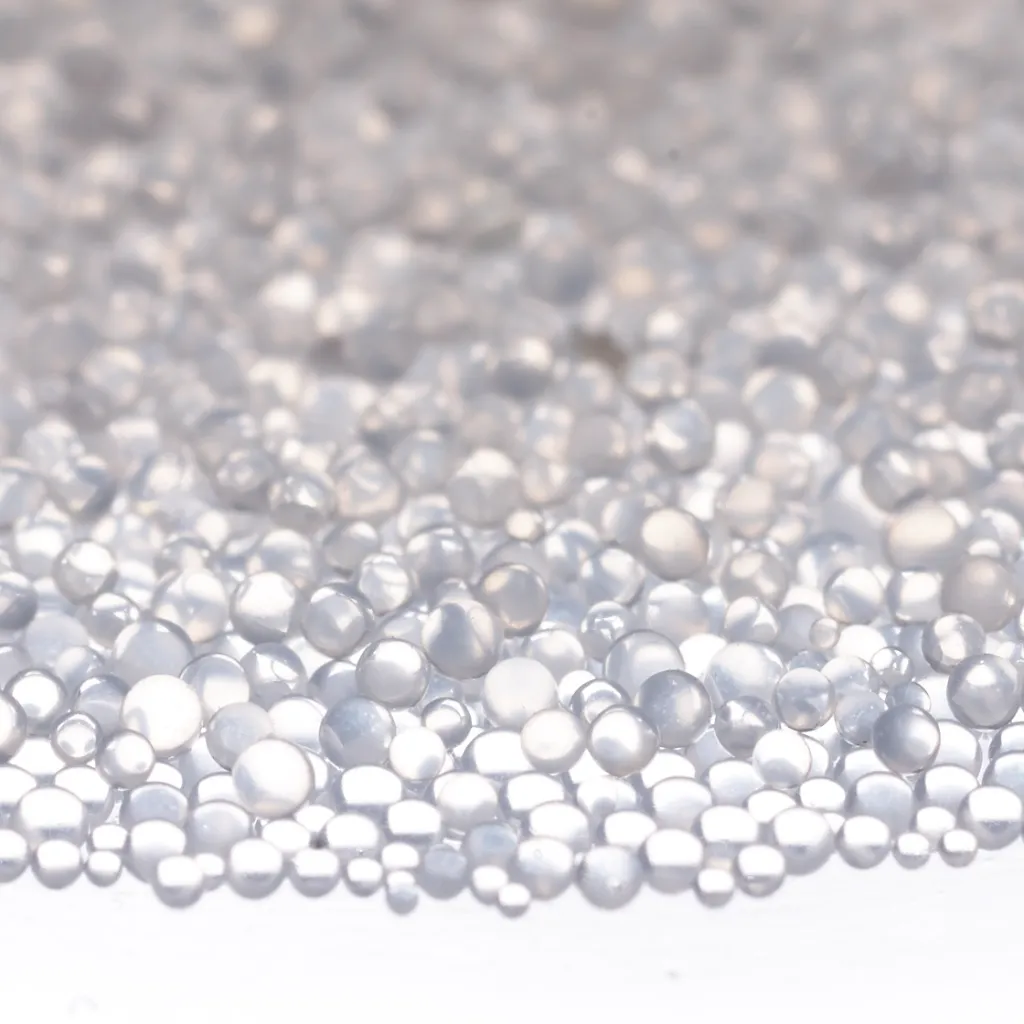
This specialized mixed bed matrix combines crosslinked divinylbenzene-polystyrene gel beads formulated with sulfonic acid and Type I Quaternary Ammonium functional groups. Shipped fully regenerated in the active H⁺ and OH⁻ ionic forms at a strict 40:60 volumetric ratio, it provides full mineral acid and cation retention, eliminating baseline impurities while exhibiting exceptionally low pressure drop characteristics. Compliant with international regulatory frameworks, the material holds official IFANCA Halal certification, guaranteeing safe integration into standard industrial food, beverage, and electronics manufacturing facilities. Purolite MB400 functions flawlessly in both coflow and counterflow systems, as well as working mixed bed configurations, providing a cost-effective path to clean, high-resistivity water processing.
Removal Capabilities:
Total Dissolved Solids (TDS) Deionization: Complete extraction of scale-forming Cations and mineral acid Anions to produce high-purity, demineralized process water.
Silica and Carbon Dioxide Reduction: Effectively traps weak acids and residual trace minerals under standard working mixed bed operational profiles.
Technical Characteristics of the Media:
Product Type: Polystyrenic Gel Mixed Bed Resin
Matrix Structure: Gel polystyrene crosslinked with divinylbenzene (Cation and Anion components)
Functional Group: Sulfonic Acid (40%) / Type I Quaternary Ammonium (60%)
Ionic Form during Delivery: H⁺ form / OH⁻ form
Total Exchange Capacity: Cation: min. 1.9 eq/L (H⁺ form) / Anion: min. 1.0 eq/L (OH⁻ form)
Moisture Content: Maximum 65%
Bead Size Distribution Range: 300–1,200 µm (Maximum 1% < 300 µm; Uniformity Coefficient ≤ 1.7)
Number of Uncracked Beads: Minimum 95% whole beads
Beads Particle Density: 1.05–1.28 g/mL
Bulk Weight / Shipping Weight: 705–740 g/L (44.1–46.2 lbs/ft³)
Standard Packaging Volume: 25-liter bags
Recommended Operational Conditions:
Maximum Operating Temperature: 100°C (212°F) for Non-Regenerable Bed / 60°C (140°F) for Regenerable Bed
Operating pH Range: 0–14 (Stable across broad chemical inputs)
Minimum Bed Depth: 800 mm (2.6 ft)
Service / Fast Rinse Flow Rate: 10–40 BV/h (Depending on influent fluid quality and system setup)
Co-Current Regeneration / Displacement Rinse Flow Rate: 1–10 m/h (For regenerable configurations only)
Total Rinse Water Consumption: 3–6 Bed volumes (Prior to reaching peak resistivity)
Regenerant Type and Concentration: Not Applicable (Ready-to-use mixture; external regeneration requires separate acid/caustic processing)
Salt Consumption for Regeneration: Not Applicable (Does not regenerate with NaCl brine solution)
Please note: To calculate the exact filtration cycle capacity and optimize the automated operations of your mixed bed deionization unit, a professional fluid analysis is highly recommended.
More Products
These other products might interest you